
Risk Assessments
Practical Slip, Trip and Fall Risk Assessments
Daniels provides independent slip, trip and fall risk assessments to assist property owners, property managers, facility managers and other organisations in identifying pedestrian hazards and implementing practical risk controls. A slip resistance test provides valuable objective information about the measured performance of a floor surface. However, the test result alone does not always provide a complete assessment of the risk of a person slipping, tripping or falling. Daniels combines slip resistance testing with engineering, materials, commercial property and risk management experience to consider the broader environment in which people walk and the factors that may contribute to an accident.
Experience from Real Slip, Trip and Fall Incidents
An important part of the Daniels approach comes from Bruce Whiteley's extensive involvement in slip and fall investigations and expert witness matters. Investigation of actual accidents provides valuable insight into the factors that are examined after a person has been injured and the records, procedures and risk controls that may become important following an incident. Through expert witness work for property owners and managers, insurers, legal advisers and plaintiffs, Bruce has reviewed a wide range of accident circumstances, expert reports, testing results, photographs, CCTV footage, cleaning records, inspection records, maintenance documentation and other evidence associated with slip, trip and fall accidents. This experience is applied proactively to Daniels' pedestrian risk assessments to help clients identify potential problems and improve risk controls before an incident occurs.
More Than Floor Slip Resistance
Slip, trip and fall hazards can result from a combination of factors. Depending on the property and purpose of the assessment, Daniels may consider:
measured floor slip resistance
wet, dry or contaminated surface conditions
flooring type, texture, wear and deterioration
cleaning methods, cleaning chemicals and cleaning frequency
spills, water, oils, food residues and other contaminants
entrances and the management of water during wet weather
entrance matting and mat placement
ramps and surface gradients
stairs, steps and landings
changes in floor level
transitions between different flooring materials
damaged or uneven pedestrian surfaces
lighting and visibility
warning signs and temporary risk controls
pedestrian traffic and foreseeable use of the area
inspection and maintenance procedures
previous incidents and reported hazards
existing risk management procedures and documentation.
Testing incorporated where appropriate
Where appropriate, slip resistance testing can be incorporated into the assessment to provide objective measurements of the performance of pedestrian surfaces.
Commercial Property Risk Assessments
Daniels has extensive experience working with commercial property owners, property managers and facility managers responsible for managing large and complex pedestrian environments. This provides practical understanding of how buildings operate, including cleaning contracts, inspection programs, maintenance systems, wet-weather procedures, incident reporting and contractor responsibilities. Risk assessments can therefore consider not only the physical condition of the pedestrian surface but also the systems used to manage slip and trip risks within the property. Assessments can be undertaken for a single area of concern, an entire property or across multiple properties within a portfolio.
From Risk Identification to Practical Controls
Identifying a hazard is only the first step. Where appropriate, Daniels can provide practical recommendations to assist clients in considering suitable slip and trip risk controls. Recommendations may relate to cleaning practices, maintenance, entrance matting, surface treatments, warning systems, inspection procedures, periodic floor slip testing, documentation or other controls appropriate to the circumstances. The objective is not necessarily to eliminate every conceivable risk, but to help organisations identify foreseeable hazards and establish practical systems for managing pedestrian safety.
Periodic Testing and Risk Monitoring
The condition and slip resistance of pedestrian surfaces can change over time due to wear, contamination, cleaning practices, surface treatments and environmental exposure. Daniels can establish annual slip resistance testing and periodic monitoring programs to help property and facility managers identify changes in floor performance and maintain documented information about pedestrian surfaces. Testing results can form part of a broader floor safety management program incorporating inspections, maintenance, cleaning procedures, incident information and other risk management activities.
More Than Just a Test Result
Daniels' approach to slip, trip and fall risk management draws on more than two decades of slip resistance testing together with practical experience investigating actual accidents and reviewing the circumstances that contribute to them. This provides an important perspective: understanding not only how a floor performs when it is tested, but also how the pedestrian environment is managed and the factors that can become significant when an accident occurs. Our objective is to provide independent assessment, clear findings and practical risk-management advice to help clients make informed decisions about pedestrian safety.
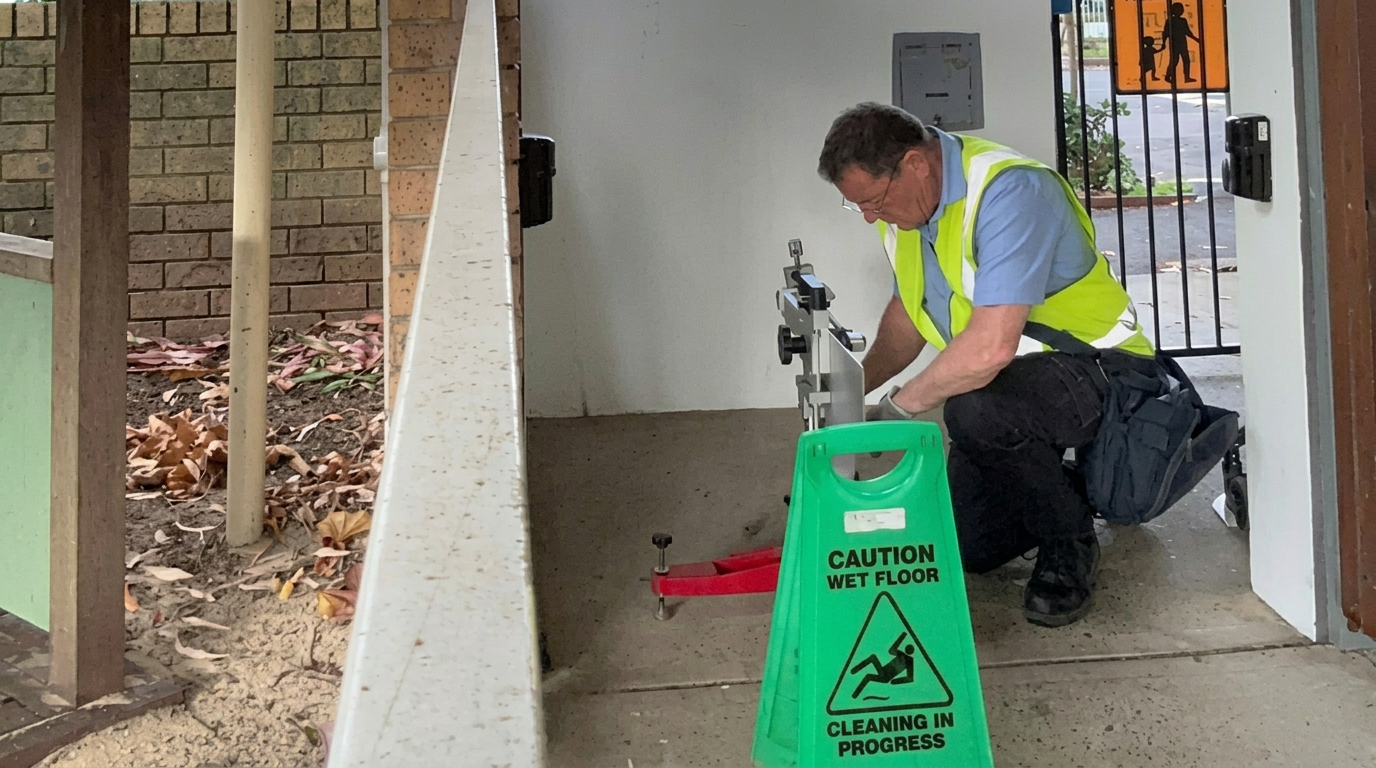
Walking the site with you to identify slip and fall hazards.
Need a floor tested?
Tell us about the site and the surfaces. We will come back with scope, timing and cost.