
Slip Resistance Testing
Independent Floor Slip Testing and Practical Advice
Daniels provides professional slip resistance testing for existing and new pedestrian surfaces using recognised Australian Standard test methods. Testing can be undertaken for individual areas, entire properties or as part of an ongoing floor slip resistance testing program across multiple sites.
Our slip testing services include testing of
New builds and construction certification
New flooring projects
Strata
Commercial offices
Shopping Centres
Local government buildings and facilities
Hospitals, medical centres and aged care facilities
Hospitality, hotels, commercial kitchens
Schools and public infrastructure
Industrial
Our clients include
Daniels provides slip resistance testing and floor slip testing services to a wide range of organisations responsible for managing safe pedestrian environments.
Commercial property owners and property managers
Facility managers
Builders and construction companies
Cleaning and facility service providers
Insurers and insurance assessors
Healthcare and aged care facilities
Shopping centres and retail properties
Hotels and hospitality venues
Strata and body corporate managers
Government and public facilities
Schools, universities and education facilities
Law firms and legal advisers
Independent testing, clear reporting
Whether testing involves a single problem area, a new construction project or an ongoing slip resistance testing program across a property portfolio, Daniels provides independent testing, clear reporting and practical advice.
Wet Pendulum Testing
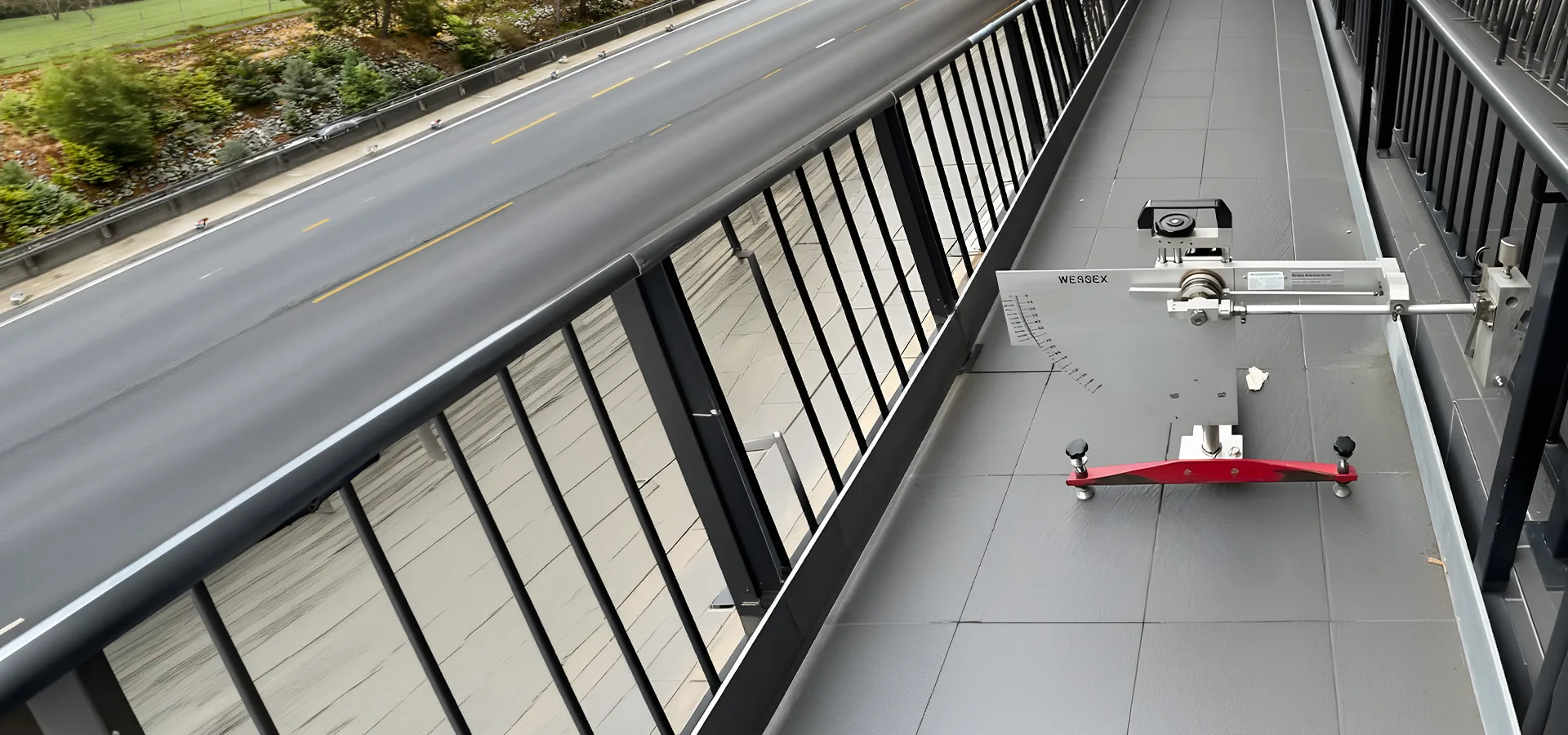
Daniels conducts wet pendulum slip testing to measure the wet slip resistance of pedestrian surfaces and determine the relevant slip resistance classification. Testing is undertaken using recognised Australian Standard test methods, including AS 4586 slip resistance testing for new pedestrian surface materials and AS 4663 slip resistance testing for existing pedestrian surfaces, where applicable. Results may include the measured Slip Resistance Value (SRV) and applicable P classification, together with information to assist the client in understanding the significance of the results.
Dry Floor Testing
Where appropriate, Daniels can also undertake dry floor slip resistance testing to assess pedestrian surfaces under dry conditions. The appropriate test method is selected according to the surface, location, conditions of use and purpose of the assessment.
New Flooring and Construction Projects
Daniels provides slip resistance testing for new flooring for builders, developers, flooring contractors and property owners. Testing can assist with the assessment of flooring prior to project completion or handover and provide documented information about the measured slip resistance and classification of the installed surface. Urgent testing can be arranged where available for construction and project requirements.
Existing Floors and Periodic Testing
The slip resistance of a floor can change over time due to wear, contamination, cleaning practices, surface treatments and environmental exposure. Daniels provides existing floor slip testing, annual slip resistance testing and periodic testing programs to assist property and facility managers in monitoring changes in floor performance. Our approach is simple: more than just a test result. We help clients understand what the results mean in the context of the location, use of the surface and other factors that may influence slip risk.
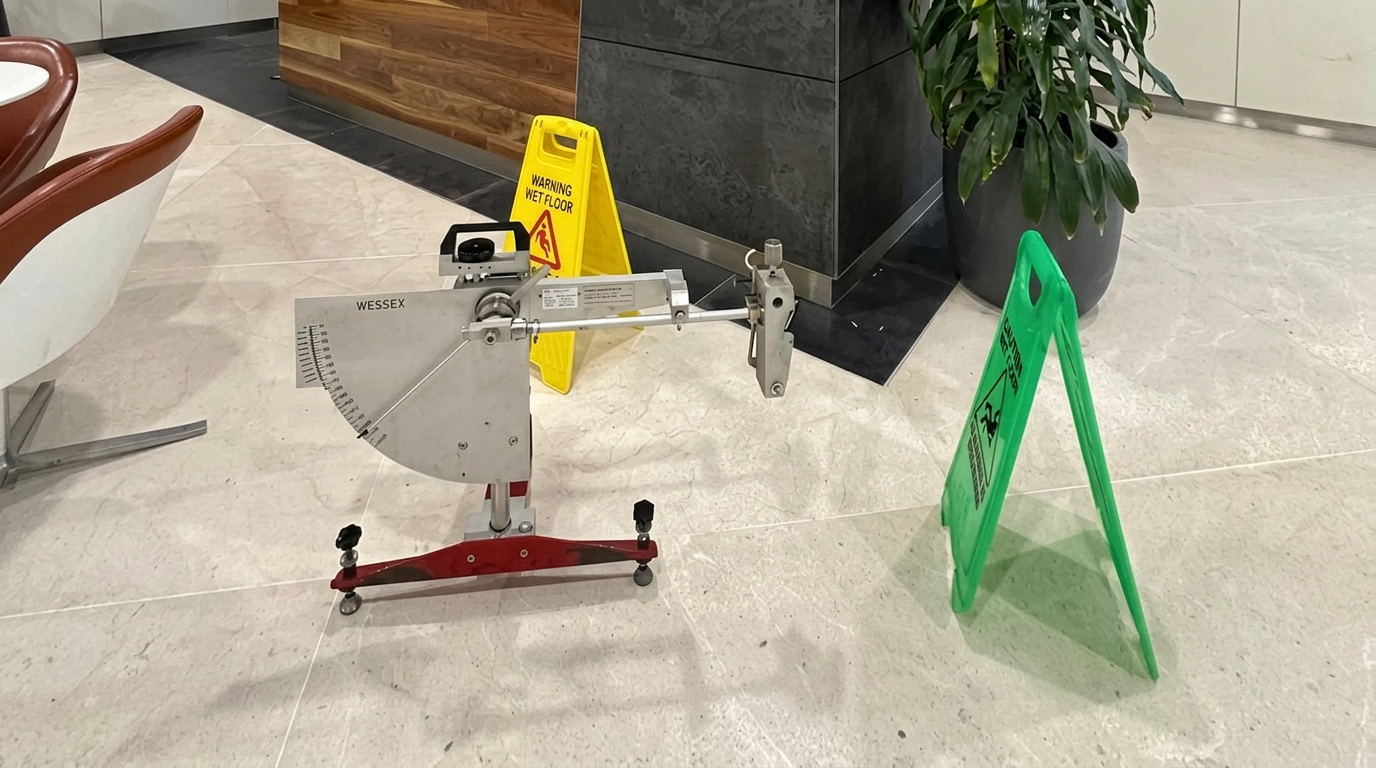
Wet pendulum testing on site, in the conditions the floor is actually used.
The four slip test methods explained
METHOD 01
WET PENDULUM
The wet pendulum slip resistance test is generally conducted using a Wessex or Munro pendulum friction tester. The device is portable and consists of a weighted foot with a test slider that swings down and slides across the surface, wetted with water, for 125mm. The weighted foot carries a spring loaded rubber test slider that exerts a prescribed force as it passes over the specimen. Testing uses a 96 rubber slider for smoother indoor surfaces, because it gives greater discrimination between smooth textures including polished stone, timber, polished concrete, polished aggregates and ceramic tiles. A 55 rubber slider has traditionally been used for outdoor surfaces including highly textured and porous materials such as stone, clay and brick pavers and highly textured ceramic tiles.
METHOD 02
DRY FLOOR FRICTION
The dry floor friction slip resistance test uses a battery or electric operated machine commonly referred to as the dry floor friction tester, or Tortus. It measures the force opposing the motion of a 9mm diameter test slider made of Four S rubber. The motor moves the test device across the floor at a constant speed of 1 metre per minute. The average of two measurements of 800mm is taken and the result is expressed as a coefficient of friction. On an existing surface the result is generally interpreted as a pass where the coefficient of friction is greater than 0.4.
METHOD 03
WET BAREFOOT RAMP
A panel of the test surface is constructed on a ramp large enough for a person to walk on while the angle of the platform is increased, until the limit of safe walking is reached. That angle is the mean angle of inclination. Three calibration boards, A, B and C, are also tested, and the classification of the test panel is based on its mean angle of inclination compared with the calibration boards.
METHOD 04
OIL WET RAMP
The oil wet ramp test differs from the wet barefoot ramp test in that motor oil is placed on the surface instead of water, and the two testers wear safety boots rather than going barefoot. Three calibration boards are walked in the same manner and are used to provide a correction factor that standardises the walkers. The classification is determined by the mean angle of inclination achieved and that correction factor.
Note. There is no direct correlation between ramp and pendulum slip test methods.
Wet pendulum classification
We do not publish classification thresholds we cannot verify. Contact us and we will explain how the classifications apply to your surface.
Need a floor tested?
Tell us about the site and the surfaces. We will come back with scope, timing and cost.